S Corp ReturnQuestions owners actually bring.
The stack is specific. The questions are too. If yours is missing, the form can hold it.
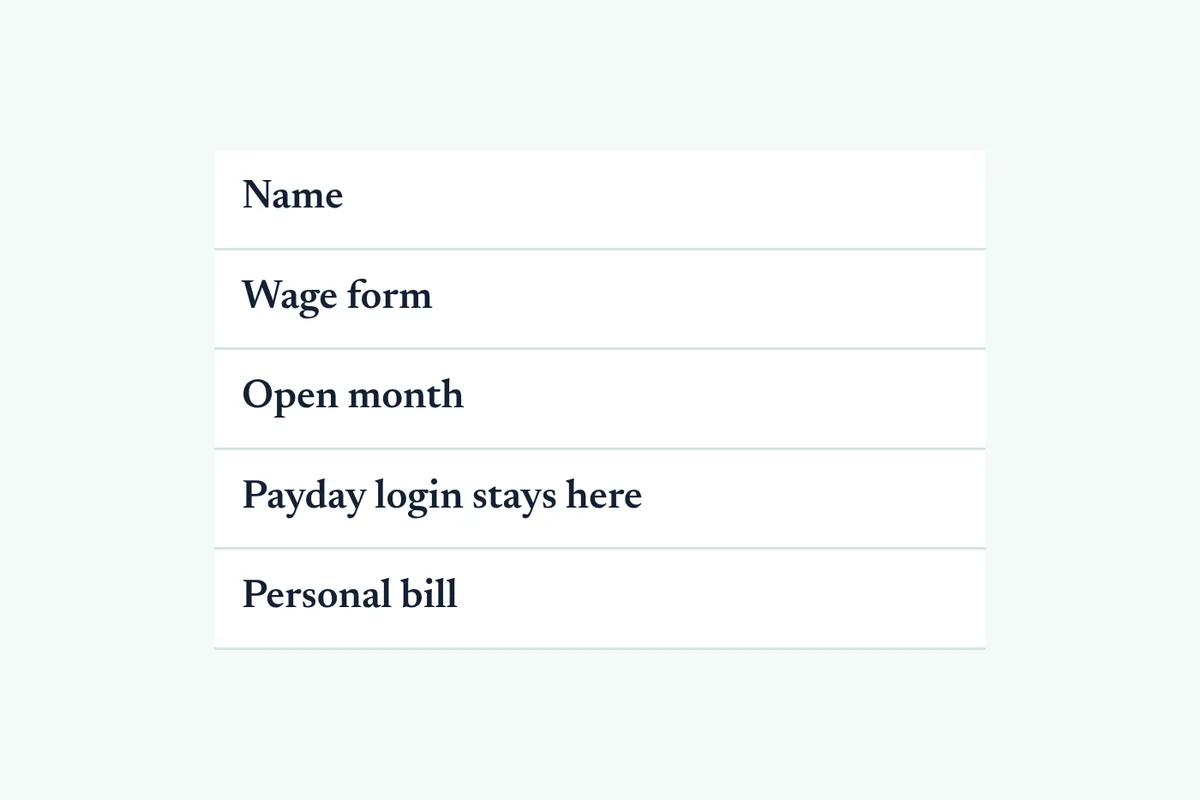
Where do we look first.
Your name. The K-1 and the wage form have to spell the same person. If you only have one of those pages, we look for the other before we discuss profit.
A company that exists, with a personal return that never received a K-1, is the same kind of stop. The page is missing. We do not treat the personal return as a finished picture of the year.
Is the due date the draft.
No. The federal date for a calendar-year company is the 15th day of the third month, and an extension moves the filing day. Neither event closes the books. The draft is the pages. The date is the calendar. We keep them in separate hands.
People sign because the date felt louder than the open month. We would rather name the open month and use the extension than file a lump.
What if the wage totals disagree.
Then the draft waits. The gross on the wage form, the payroll in the books, and the cash sent to the provider are three different figures. They are related. They are not required to be identical. They are required to be explainable.
If nobody can explain the gap, we do not sign over it. The explanation is usually the difference between funding and gross, or a payday that was never run.
Can we sign while a month is open
We do not. An open month can still change wages, money taken out, and profit. A signature on a moving month is a guess. The close is the bank tied out, payroll in the books, and the three equity piles kept apart.
If the year is the thing that is open, say so. A choice that can still move the draft is more useful than a signature that freezes a mess.
Do you run payday.
No. Your name sits on the provider account, and the payday button is yours to press. Wages reach the finished month from the wage form. This practice does not process payroll. The password stays on that account, and this practice does not ask you to hand it over.
If payday was never set up, that is allowed to be the sentence you send. It is a better sentence than a year of transfers labeled as wages after the fact.
What if the company paid a personal bill
We treat that as money taken out, unless the company actually used what was bought. The receipt stays. The pile changes. Personal spending paid by the company does not become a supply because the software menu offered that word.
The same idea covers a transfer to a personal account. It can feel like pay. On the draft it is a distribution, and it has to fit the shareholder's record of basis. We do not read basis off the checking balance.
Will you quote before you see the stack
A figure shouted before anyone has seen the draft is a guess, and a guess becomes an argument. Tell us whether the month is closed, whether a wage form exists, and whether the name matches. The scope follows that, not a printed menu.
Hearing the scope leaves you free to walk away. Curiosity does not create a bill. An empty hour on our side does not invent a charge.
Ask the question that is missing
You will be talking to the Steven Palmieri practice.
One sentence is enough. Name the page if you have it.