S Corp ReturnThe order we read a draft in.
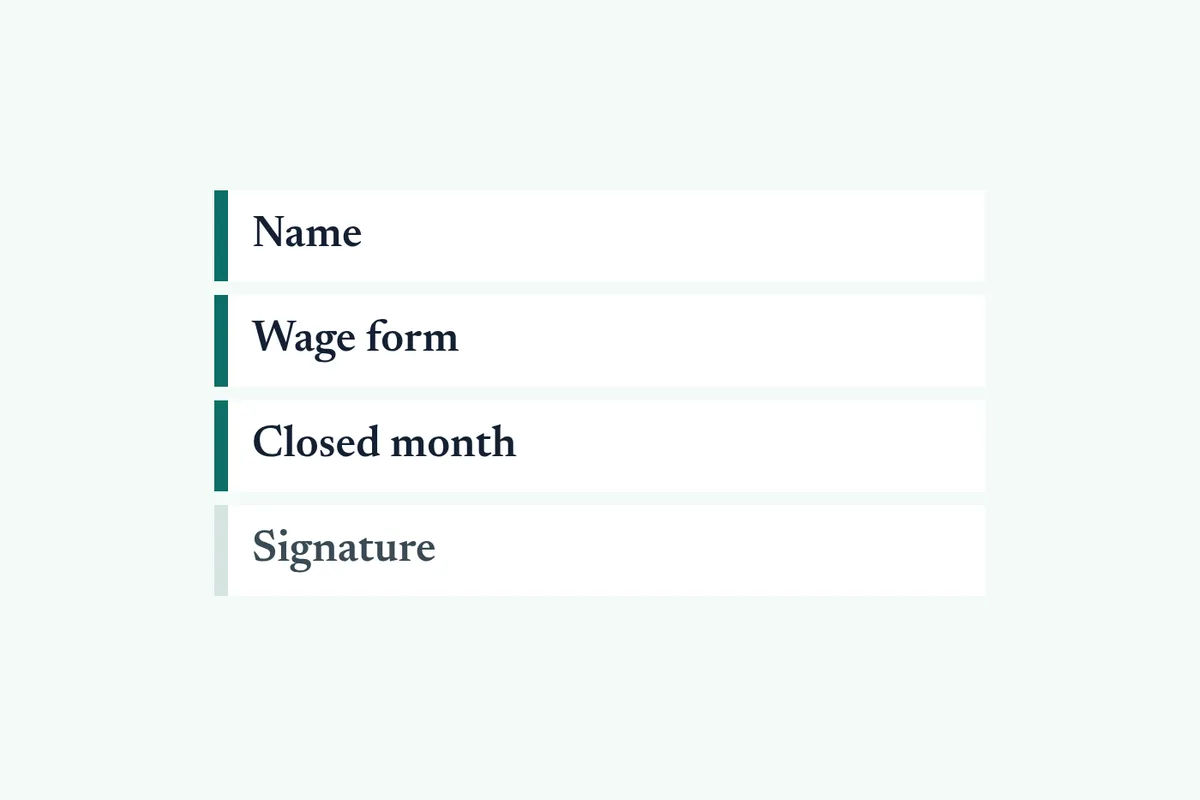
Four stops, in this sequence.
We open a draft in one order. Your name on the K-1, matched to the wage form. The wage form, matched to the payroll that was actually run. The closed month under the draft, so the figures have a month that is finished. The signature after those three agree.
Software will print the pages in a different order, and a due date will shout louder than any of them. The printed order is a convenience. Our order is the one that catches a draft that is early. If you only have time for one pass, this is the pass.
Each stop can end the visit. A name that does not match ends it. A wage form that is missing ends it. A month that is still open ends it. Ending the visit there is a result. It is the result that keeps a bad signature off the page.
What a closed month means here.
A month is closed when the bank ties to the statement, the provider's payroll is in the books, and money put in is not sitting in the same account as money taken out. Statements for that month should be printable without a shrug. The draft should be able to point at those statements.
Owners sometimes have a beautiful download and an open month. The download is a list of what the bank saw. The close is a decision that the list is complete and classified. A bank file is only the bank's list. Calling the month finished is a separate decision that every line has a pile.
Contributions and distributions are the accounts people blend. They often keep a running balance for the whole life of the company, because the software does not wipe them at year end. The return wants this year's movement. We take the activity for the year. A lifetime balance will make the draft describe years that are not this year.
The signature is a conclusion.
A signature says the four stops were survivable. It does not say the year was optimized, and it does not say a lender will like the statements. It says the name, the wages, and the closed month agree with the pages in the stack.
If a choice can still move the year, we would rather name that choice before the signature than discover it in a letter later. A wage that was never run, a personal bill parked as a supply, a K-1 that never reached the personal return. Those are choices and repairs, and they belong in the conversation while the draft is still a draft.
Bring the stack in whatever order the software used. We will reorder the reading. Arrive with the page, not with a speech you rehearsed. The page you doubt is enough.
Name the stop you are on
You will be talking to the Steven Palmieri practice.
Say whether you are stuck on the name, the wage form, or a month that is still open.