S Corp ReturnThe wage form beside the K-1.
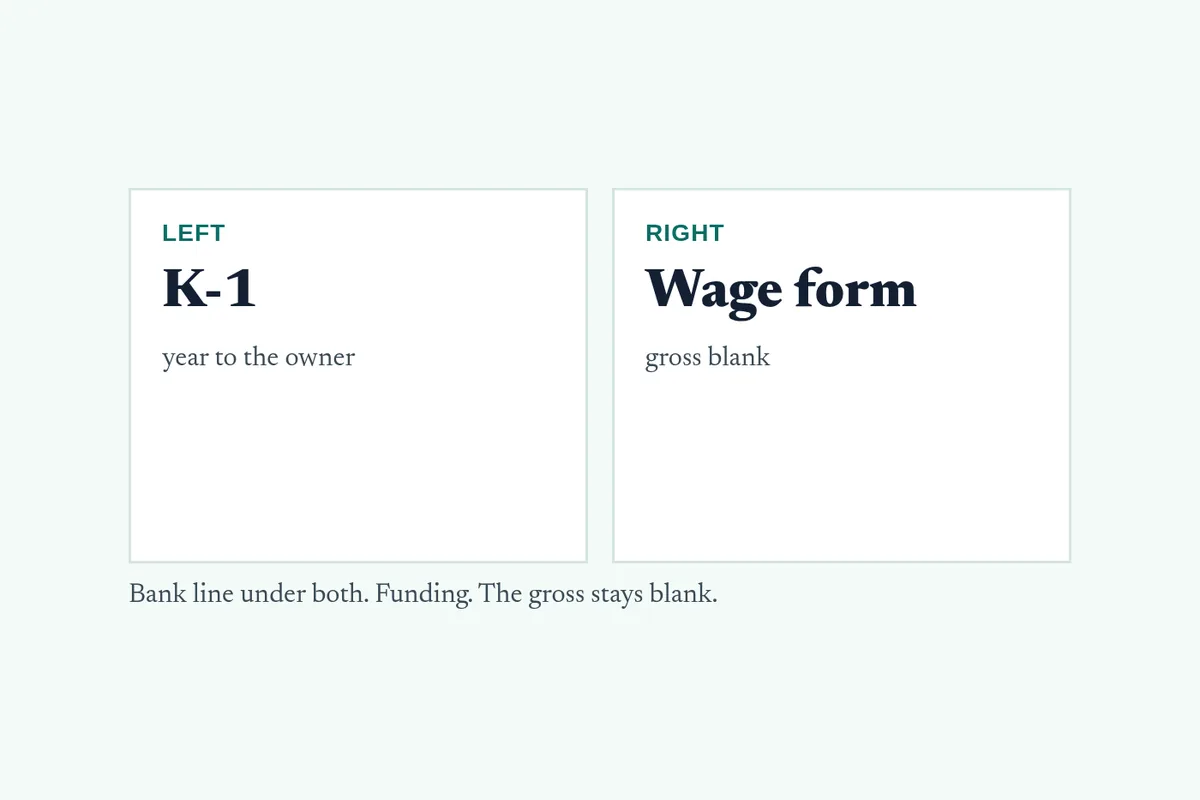
The pair we actually compare.
Put the K-1 on the left and the wage form on the right. The K-1 is the company's year reaching you as a shareholder. The wage form is the gross the company paid you as a worker in that company. They are allowed to tell different stories. They are not allowed to ignore each other.
If the wage form shows wages and the books show a different payroll total, the draft is not ready. If the K-1 is present and the wage form is absent, we ask why before anyone talks about the profit. A company that the owner works in, with a draft that shows profit and no wages, is a shape we do not shrug at.
Some calculations on the personal return look at wages the company paid. A draft that skipped the wage form can be a full printout and still be the wrong shape for that personal return. We would rather find the wage form than invent a number to fill the hole.
The debit is funding, not the gross
The bank line to the payroll company is the cash sent so the provider could pay. It often will not equal the gross on the wage form, because taxes were withheld and the provider's own movement is in that debit. People reconcile the bank, see the debit, and think they have reconciled wages. They have reconciled funding.
We set the provider up. You run payday. We map the gross from the wage form into the books when the month closes. We do not process the payday, and we do not treat the funding debit as a substitute for the form.
If the provider was never set up, say that. A year of transfers is not a silent wage. It is a year in which pay was not run. That fact belongs in the open, while something can still be done about the year the draft covers.
A transfer is not a wage.
A transfer from the company to a personal account on Friday feels like getting paid. On the draft it is money taken out. Wages go through the provider and produce a wage form. Distributions go through the bank and have to fit the shareholder's basis, which is the running record of what you put in and what the company earned that you have not yet taken.
We do not calculate that record from the checking balance. The checking balance is cash. Basis is a tax record. Mixing them is how an owner thinks a transfer is free when the record says it is not.
A personal bill the company paid is the same pile as the transfer. The receipt is real. The direction of the money is out to you. We park it with distributions. We do not park it with shop supplies unless the shop actually consumed it.
Say which total disagrees
You will be talking to the Steven Palmieri practice.
Name the wage form, the bank debit, or the transfer, and say what you expected them to do.